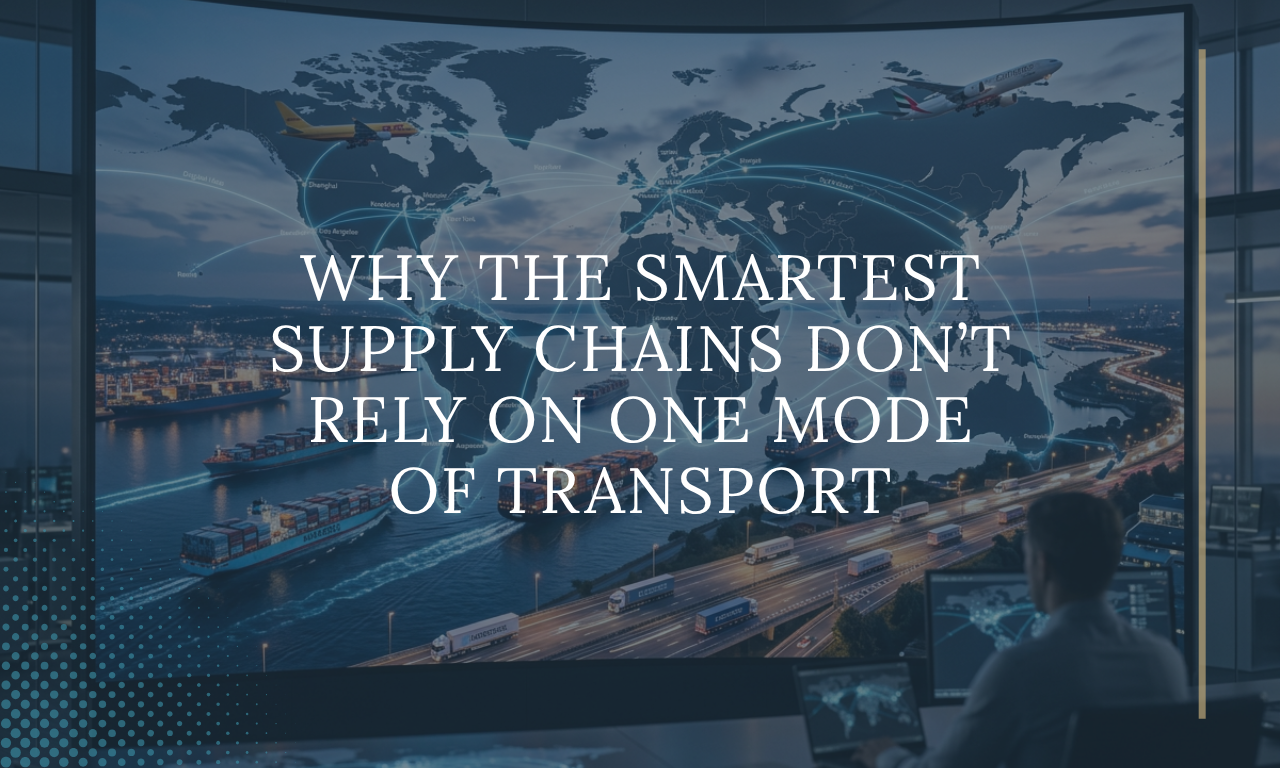
By Ian Lees, Operations Director, IN Freight Solutions
For years, supply chains were built around efficiency, finding the lowest cost, fastest route, and sticking to it. However, in today’s unpredictable global market, that approach is no longer enough.
Instead, multi-modal supply chains are becoming the gold standard. Businesses that rely on just one mode of transport are exposing themselves to unnecessary risk. According to the International Transport Forum, multi-modal logistics improves both efficiency and resilience across global trade networks.
Flexibility is now the true competitive advantage.
The Problem with Relying on One Mode of Transport
A supply chain built on a single mode whether sea, air, or road may look efficient on paper. However, it creates a fragile system in reality.
In today’s environment, disruptions can arise without warning. According to the World Economic Forum, global supply chains are increasingly vulnerable to external shocks and disruptions.
For example:
- Port congestion delaying sea freight
- Driver shortages affecting road transport
- Air freight capacity limitations increasing costs
- Geopolitical events disrupting global trade routes
As a result, relying on one method means risk builds quickly and quietly.
Why Multi-Modal Supply Chains Are Stronger
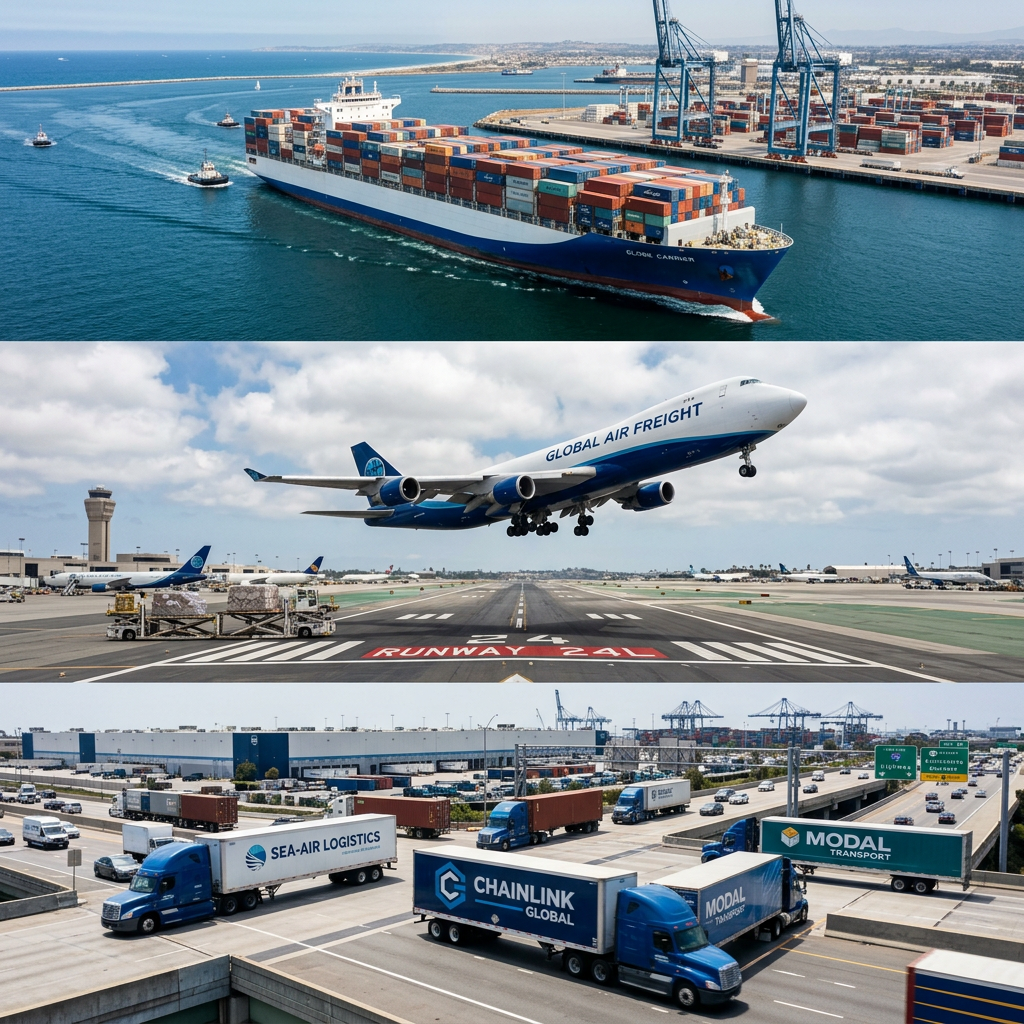
Because of the risks, most successful businesses are now shifting to a multi-modal supply chain strategy. This means combining different transport modes to create flexibility and resilience.
1. Mixing Transport Modes Reduces Risk
Rather than depending on one solution, businesses are combining:
- Sea freight for cost-effective bulk shipments
- Air freight for urgent or high-value goods
- Road and rail freight for flexibility and regional control
This approach ensures that if one mode is disrupted, another can be used to keep goods moving.
2. Adapting Supply Chains Based on Conditions
Modern supply chains must be dynamic. Therefore, leading businesses constantly review:
- Transit times
- Capacity availability
- Market conditions
- Freight costs
For instance, many businesses now rely on real-time industry benchmarks such as the Freightos Baltic Index and insights from IATA to guide decision-making.
They don’t wait for disruption to happen, instead, they adjust proactively.
For example, switching from sea freight to air freight during delays, or rerouting shipments to avoid congested ports, can protect operations and customer commitments.


3. Planning for Disruption Improves Resilience
In today’s environment, disruption is no longer a possibility, it’s an expectation. That’s why multi-modal supply chain planning is critical.
Resilient businesses:
- Build contingency routes in advance
- Allow flexibility in delivery schedules
- Work with strategic freight partners who provide alternatives
This level of planning ensures businesses can respond quickly when challenges arise.
Adaptability Is the Key to Competitive Advantage
Ultimately, the strongest supply chains share one key trait: adaptability.
They are not fixed or rigid. Instead, they are designed to evolve alongside changing global conditions.
Businesses that invest in adaptable, multi-modal supply chains benefit from:
- Reduced disruption risk
- Improved delivery reliability
- Greater control over costs
- Stronger customer confidence
The Role of Strategic Freight Planning
Today, freight forwarding is no longer just about moving goods. It’s about enabling smarter decisions.
At IN Freight Solutions, we help businesses:
- Build flexible, multi-modal supply chains
- Identify risks before they escalate
- Develop contingency strategies
- Adapt quickly when conditions change
Because relying on one route or one mode of transport is no longer a viable long-term strategy.
Conclusion: Build a Supply Chain That Can Adapt
Ultimately tThe question is no longer:
“What is the cheapest transport option?”
Instead, it’s:
“What is the most resilient and adaptable supply chain strategy?”
In today’s environment:
- Disruption is constant
- Market conditions change rapidly
- Customer expectations remain high
Therefore, investing in a multi-modal supply chain is not just smart, it’s essential. Contact us for expert freight advice.
Adaptability isn’t optional. It’s the foundation of long-term success.