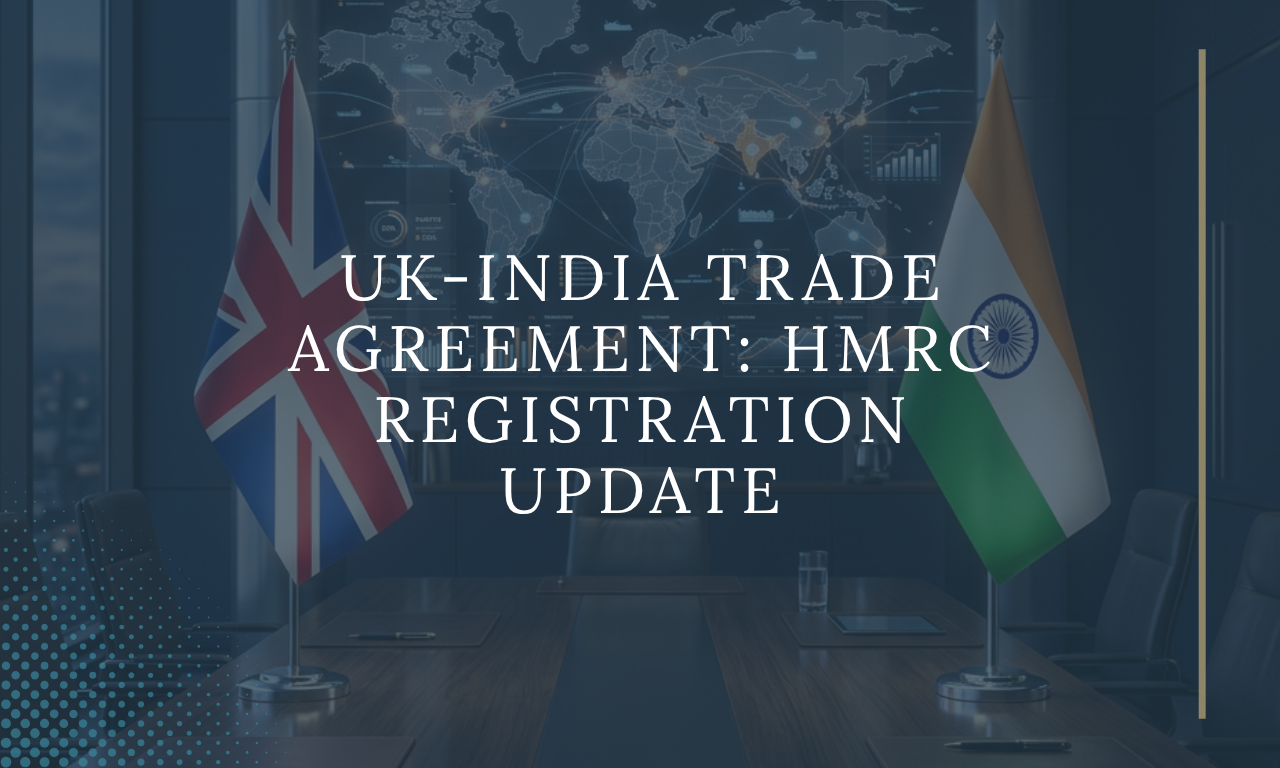
Businesses exporting goods from the UK to India should be aware of an important change introduced under the UK-India Free Trade Agreement (FTA). HMRC has launched a registration process for UK exporters and producers wishing to complete origin declarations and enable Indian importers to claim preferential tariff rates on qualifying goods.
For companies trading with India, understanding these new requirements could help customers benefit from reduced import duties while ensuring compliance with the agreement’s Rules of Origin. [business.gov.uk], [gov.uk]
What Is the UK-India Free Trade Agreement?
The UK-India Free Trade Agreement aims to strengthen trade between the two countries by reducing barriers and providing preferential tariff treatment for qualifying goods. To access these benefits, exporters must be able to demonstrate that their products meet the agreement’s Rules of Origin requirements.
Previously, many exporters relied on traditional certificates of origin. Under the agreement, exporters can self-certify origin by completing an origin declaration, removing the need to obtain a certificate from a competent authority for every qualifying shipment.
Who Needs to Register with HMRC?
Registration is required if:
- You are a UK producer or exporter.
- You export goods originating in the UK to India.
- You intend to complete origin declarations under the UK-India Free Trade Agreement. [gov.uk]
HMRC will share registration details with the Indian customs authorities to enable the authentication of origin declarations submitted under the agreement.
What Happens if You Do Not Register?
Businesses can continue exporting goods to India without registering if:
- The goods do not qualify for preferential tariffs.
- The exporter chooses not to use the UK-India Free Trade Agreement.
However, the importer in India may be required to pay the standard tariff rate instead of receiving any preferential tariff benefits available under the agreement.
In addition, HMRC has confirmed that origin declarations submitted by unregistered exporters may be rejected by the Indian customs authorities, preventing the importer from claiming preferential treatment.
Understanding Rules of Origin
Rules of Origin determine whether goods qualify as originating in the UK or India and are therefore eligible for reduced tariff rates.
Products may qualify where they are:
- Wholly obtained or produced in the UK.
- Manufactured entirely from originating materials.
- Produced using non-originating materials but meet the agreement’s product-specific rules.
Exporters should ensure they fully understand the origin requirements applicable to their products before making any declaration under the agreement.
What Documentation Is Required?
To claim preferential tariff treatment under the UK-India Free Trade Agreement, exporters must complete an Origin Declaration using the prescribed wording contained within the agreement.
The completed Origin Declaration must be sent to:
- The importer in India.
- The relevant Indian Customs authority.
Indian Customs will then authenticate the declaration against HMRC’s register of approved UK exporters.
While a traditional Certificate of Origin may still be retained as supporting evidence where appropriate, the Origin Declaration is the key document used by importers to claim preferential tariff treatment under the agreement.
Can Existing Shipments Benefit From the Agreement?
One question many exporters are asking is whether shipments already in transit can benefit from the new arrangements.
Current Government guidance suggests that shipments already on the water may still be eligible for preferential tariff treatment, provided the relevant Origin Declaration requirements are completed and the goods satisfy the Rules of Origin requirements.
Businesses with shipments already en route to India should review their position promptly and discuss the available options with their importer, customs adviser or freight forwarder.
Record Keeping and Compliance
Exporters issuing Origin Declarations should maintain supporting evidence demonstrating that their products satisfy the Rules of Origin requirements.
Records should be retained for at least five years and made available if requested during any customs verification process.
Companies should only issue Origin Declarations when they are confident that their products qualify under the agreement, as responsibility for the accuracy of the declaration remains with the exporter.
What Does This Mean for UK Businesses?
For many exporters, particularly manufacturers selling directly into the Indian market, the agreement may offer significant duty savings and improved competitiveness. However, businesses must review their supply chains and product origin requirements carefully before relying on preferential tariff treatment.
Freight forwarders and logistics providers can help facilitate the movement of goods, but responsibility for the accuracy of origin declarations remains with the exporter or producer making the claim.
Frequently Asked Questions
Do I still need a Certificate of Origin when exporting to India?
The Origin Declaration is the primary document used to claim preferential tariff treatment under the UK-India Free Trade Agreement. However, businesses may still retain Certificates of Origin and supporting documentation as evidence of origin where appropriate.
How do I register for UK-India Origin Declarations?
Registration can be completed through HMRC using your EORI number, business details and registered email addresses before issuing Origin Declarations.
Can shipments already on the water qualify for preferential tariffs?
Government guidance indicates that shipments already in transit may still be eligible for preferential tariff treatment, provided the relevant Origin Declaration requirements are met and the goods qualify under the Rules of Origin.
How long should supporting records be retained?
Exporters should retain evidence supporting Origin Declarations for a minimum of five years.
Useful Resources
For further information, visit:
- HMRC Registration Guidance: https://www.gov.uk/guidance/register-to-complete-origin-declarations-under-the-uk-india-free-trade-agreement
- UK-India Rules of Origin Guidance: https://www.business.gov.uk/campaign/alive-with-opportunity/the-uk-india-trade-deal/rules-of-origin/
- UK-India Rules of Origin Chapter: https://www.gov.uk/government/publications/uk-india-ceta-chapter-3-rules-of-origin
How IN Freight Solutions Can Help
International trade regulations are constantly evolving, and staying informed is essential for avoiding delays, compliance issues, and unexpected costs.
At IN Freight Solutions, we work closely with businesses navigating customs procedures, export documentation, and international supply chains. While exporters remain responsible for determining origin eligibility and completing declarations, our team can help you understand the practical implications of these new requirements and support your wider export logistics needs.
If your business exports to India or is considering expanding into the Indian market, get in touch with our team to discuss your freight and customs requirements.
IN Freight Solutions
Strategic Freight Solutions Built on Trust and Trusted Worldwide, Delivered with Care.